

The Meaning of Masonic Symbols – The Working Tools Series
The Common Gavel
By Steve McCall, Owner of Macoy Publishing & Masonic Supply
The meaning of the Common Gavel is found in the hands of the Mason using it.
Imagine standing before a rough stone—the unformed version of ourselves. Our goal is to transform that rough, jagged stone into a perfect one so it can be used to build a glorious structure. We raise our gavel to make the first blow.
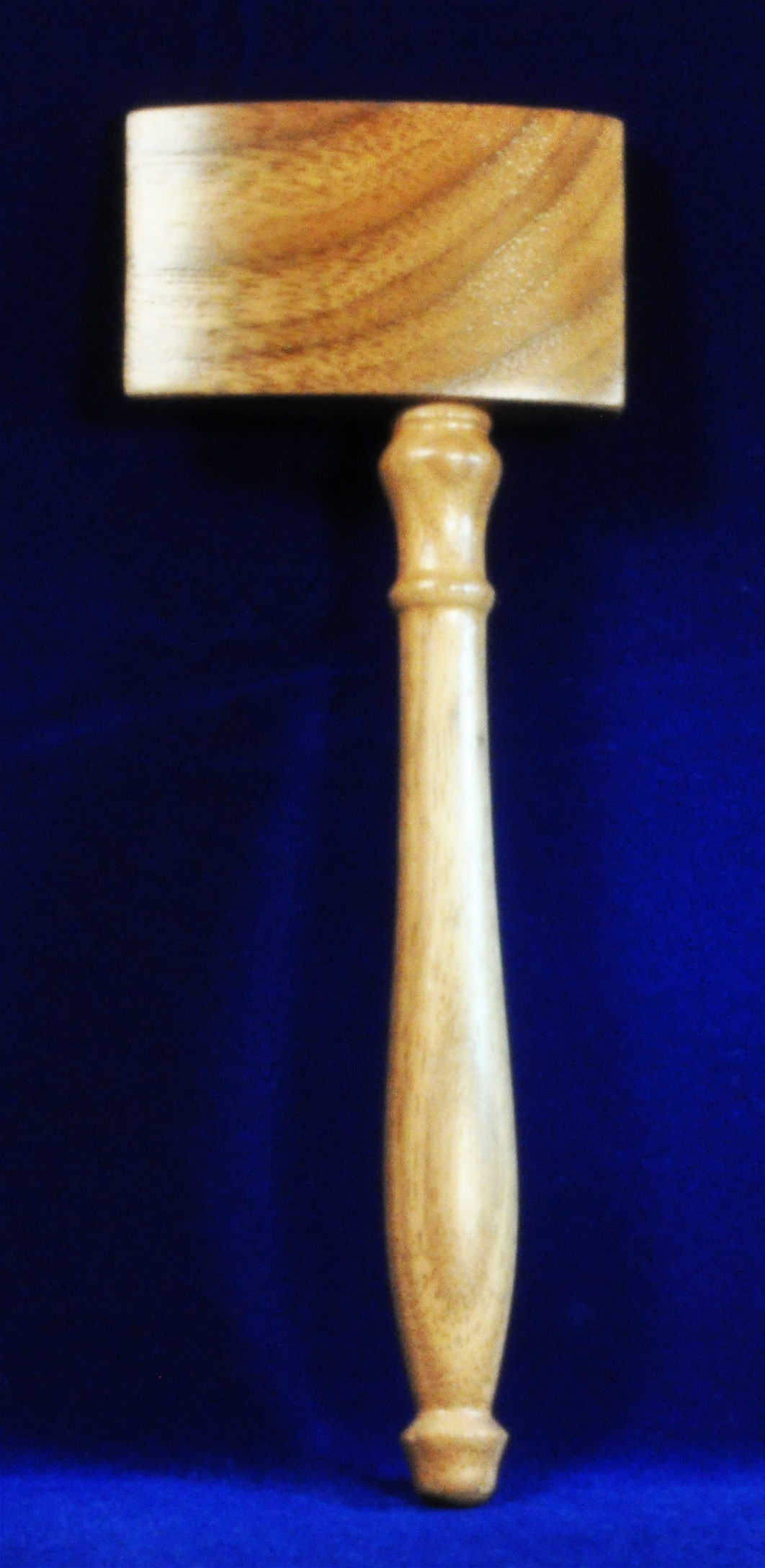 Today, the most common experience we have with gavels is to “rap up a Lodge.” However, during the building of great structures like King Solomon’s Temple, the only way to make rough stones fit properly was with a Gavel and a chisel. The stone mason had to be skilled with the gavel; otherwise, each errant blow caused more work. This precision required hours of practice. If he tried to pass a rough ashlar off as a perfect ashlar to the Master Mason, it would be rejected, affecting the entire Craft.
In this symbol, you are the stone mason. Your attention to the detail of this tool is of the utmost importance to honing your skill in chipping away at the imperfections of your spiritual temple.
The Definition of the Common Gavel
"The Common Gavel is an instrument used by operative Masons to break off the corners of rough stones, the better to fit them for the builder's use; but we, as Free and Accepted Masons, are taught to make use of it for the more noble and glorious purpose of divesting our hearts and consciences of all the vices and superfluities of life; thereby fitting our minds, as living stones, for the spiritual building—that house not made with hands—eternal in the heavens."
What did the Classic Authors say about the Common Gavel?
 William Harvey, in The Emblems of Freemasonry, states: "What the Mallet is to the workman, enlightened reason is to the passions; it curbs ambition, represses envy, moderates anger, and encourages good dispositions. Thus it represents the force of Conscience which should keep down all vain and unbecoming thoughts... so that our words and actions may ascend pure and unpolluted to the Throne of Grace."
Harvey challenges us to view the Gavel not as a weapon of destruction, but as a tool of "enlightened reason." It is the internal governor that regulates our emotional impulses, ensuring that our internal architecture remains stable and pure.
Oliver Street, in Symbolism of the Three Degrees, observes: "The symbolism of the Common Gavel has been extended so that it now typifies the enlightening and ennobling effects of training and education in all its various branches."
Street reminds us that the "striking" of the gavel is an intellectual pursuit. By pursuing education and training, we are systematically removing the "rough corners" of ignorance that prevent us from being useful to the Craft and society.
Both Harvey and Street emphasize that just understanding a tool exists is not enough; the Gavel requires skill, and that skill comes only from hours of practice. Before you strike, you must first identify where on your rough ashlar you must exert effort. Where are your blind spots? Where do your stones not line up? This requires you to look honestly at your spiritual temple and ask: where do I need more effort, and where do I need advice from a more skilled Brother or friend?
First, this is about the Gavel and the mason's skill in using it—not the rough ashlar.
You can probably think of one or two areas on your rough ashlar that need chipping away. You have likely attempted this already but haven't been able to do it so far. This is about your skill with the gavel. How are you addressing your 'vices and superfluities of life'? If you keep striking the stone the same way, you will not get different results. Is it effort, as Harvey suggests, or is it technique?
Action to be taken this week:
This week, decide which area on your rough ashlar you want to address. Research new techniques from a trusted source and seek counsel from a trusted Brother or friend. Commit to trying a new way to change your behavior. This will feel uncomfortable at first, but with time and proper coaching, you can become more skilled with your gavel and get different results.
