

What is the meaning of Masonic ritual? The 24-inch gauge and common gavel.
At the end of the ritual the worshipful master will explain
to the new initiate the meaning of the working tools. Seems straightforward.
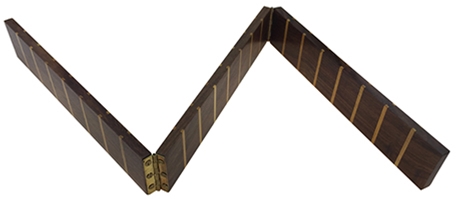 In most jurisdictions at the end of the Entered Apprentice
degree it will go something like this.
Worshipful Master, “ I now present you with the working tools of the “The
twenty-four-inch gauge is an instrument used by operative masons to measure and
lay out their work; but we, as free and accepted masons, are taught to make use
of it for the more noble and glorious purpose of dividing our time. It being
divided into twenty-four equal parts, is emblematical of the twenty-four hours
of the day, which we are taught to divide into three equal parts; whereby are
found eight hours for the service of GOD, and a distressed worthy brother;
eight for our usual vocations; and eight for refreshment and sleep.
In most jurisdictions at the end of the Entered Apprentice
degree it will go something like this.
Worshipful Master, “ I now present you with the working tools of the “The
twenty-four-inch gauge is an instrument used by operative masons to measure and
lay out their work; but we, as free and accepted masons, are taught to make use
of it for the more noble and glorious purpose of dividing our time. It being
divided into twenty-four equal parts, is emblematical of the twenty-four hours
of the day, which we are taught to divide into three equal parts; whereby are
found eight hours for the service of GOD, and a distressed worthy brother;
eight for our usual vocations; and eight for refreshment and sleep.
“The common gavel is an instrument made use of by operative
masons to break off the corners of rough stones, the better to fi t them for
the builder’s use; but we, as free and accepted masons, are taught to make use
of it for the more noble and glorious purpose of divesting our hearts and
consciences of all the vices and superfluities of life; thereby fitting our
minds as living stones for that spiritual building, that house not made with
hands, eternal in the heavens.”[1]
Then the ritual proceeds until the end when a lecture is
given to explain what the new initiate just went through.
Again, it seems straightforward. However, if it is so
simple, why have there been thousands of books explaining what those two
working tools mean? Spiritual lessons
are not always clear. The reasons are
many.
The first is the mental state of the recipient. If you are a Master Mason, you know what I am
referring to. The initiation process
seems to be constructed to take the initiate out of his place of comfort or at
least remove him from the normal daily routine. The initiation will allow him to reflect on
what he just went through. In this
reflection, the brother will begin the journey of self-improvement. The reality for many is the initiation
experience simply raises the question of “what did I just go through?”
The second reason spiritual lessons are challenging is they
deal with complicated issues. The common gavel calls us to divest our hearts
and consciences of the vices and superfluities of life. That is easy to say but
arduous to do. Being self-aware of your own vices require exploration of your
own life. How many of us take the time to reflect on this? Meditation and
prayer is good place to start. Listening to what others say about you can give
you feedback. Again, how many of us take
the time to listen to what we hear? Do we ever examine the results we have
achieved? Are we getting better? Do we own our personal policies or blame
public policies for our woes? We haven’t
even gotten to the superfluities of life.
That is whole other issue to grapple with.
The third reason is that the journey to improving yourself
is hard. The 24 inch gauge is a guide
on how a mason should spend his day. Eight hours for the service to God and
distressed worthy brother, eight for our usual vocation and eight for
refreshment and sleep. I am sure that
every mason who has been instructed on this working tool now follows those
instructions to the letter. Clearly, I
am being sarcastic. We dismiss these instructions as being antiquated or simply
not doable in today’s fast paced world.
Most of us would say something like, “Back in the 18th
century life was simpler and it was easier for them to follow these
instructions.” This justification is
probably not even true. Our world today
offers more luxuries than what our 18th century brethren had. Medicine, food, housing, and services are
much more plentiful for most of the world today than it was back then.
Maybe we are called to spend our day in the service to God
and those in distress. If we take our
obligations seriously then it is our job to figure them out. How can we use the 24-inch gauge as
inspiration to spend eight hours a day for the service of God and the
distressed? Only you can do the work and
do what is being asked of good men trying to be better.
As you can see, the ritual’s deep meaning requires much
work. The forefathers of our institution can help give you ideas on how to
start the work ahead. You are called to
read, study, and converse with good brothers on how they are improving
themselves and thereby improving their community. Martin Faulks, owner of Lewis Masonic, said,
“being a Freemason is hard work. The
promise of redemption is found in our faith.
Freemasonry calls us to do the work every day.” You can do this. It is why you joined Freemasonry
in the first place. The journey is long
and challenging, but the result will bring great joy.
