

The Meaning of Masonic Symbols - The Working Tools Series: The Trowel
Spreading the Cement of Brotherly Love
________________________________________
We have measured our time with the 24 inch gauge, divested ourselves of vices with the common gavel, and tried our work by the Square, Level, and Plumb. Now, we reach the final working tool of the Master Mason: The Trowel.
In this session, we will examine three distinct perspectives: the communal bond described in our monitors and manuals, the personal sacrifice identified by Carl Claudy, and the hidden spiritual geometry revealed by George Steinmetz. Together, these teachings show that the Trowel is not just a tool for the Lodge, but a plan for living a spiritually aligned life.
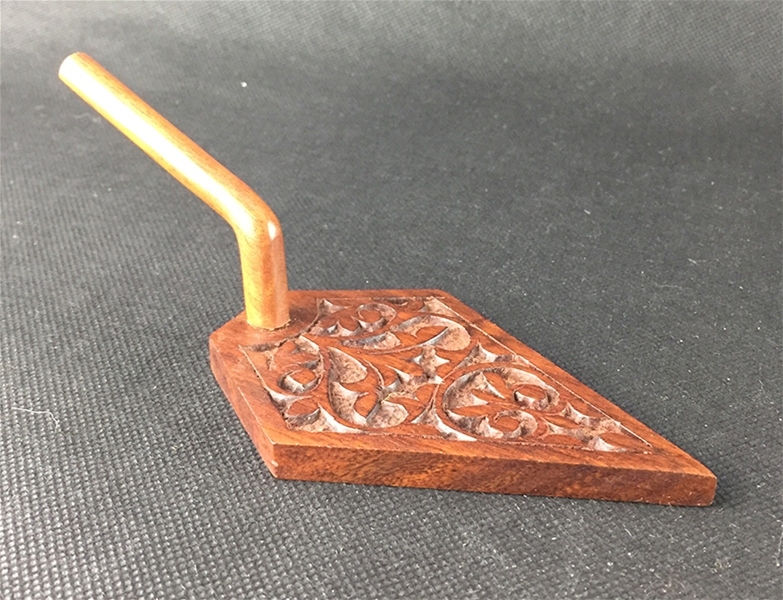 A version of the trowel many of us learned in our catechism states: “The Trowel is an instrument used by Operative Masons to spread the cement which unites a building into one common mass or whole; but it is used symbolically for the more noble and glorious purpose of spreading the cement of brotherly Love and Affection, which unites us into one sacred band or society of friends and Brothers—a Temple of living stones, among whom no contention should ever arise, save that noble contention, or rather emulation, of who can best work and best agree."
What two Classic Macoy Masonic Authors say about the Trowel
 copy.jpg) In his book Foreign Countries, Carl Claudy writes: 'Before cement may be spread it must be mixed. Before there can be a real brotherhood there must be brotherly love... It is not especially difficult to make friends; to keep them is another matter. Many things contribute to the making of a friend; mutual interests or common pursuits. But there is only one way to keep a friend, and that is to be one. One can obtain brothers and brotherhood in a lodge, by conforming to the ancient usages of our Order, but to keep those brethren, as really of one’s heart one must be a brother!'
In his book Foreign Countries, Carl Claudy writes: 'Before cement may be spread it must be mixed. Before there can be a real brotherhood there must be brotherly love... It is not especially difficult to make friends; to keep them is another matter. Many things contribute to the making of a friend; mutual interests or common pursuits. But there is only one way to keep a friend, and that is to be one. One can obtain brothers and brotherhood in a lodge, by conforming to the ancient usages of our Order, but to keep those brethren, as really of one’s heart one must be a brother!'
'The trowel is a symbol of brotherly love which wells up from within us, to flow outward, more than of that other love which flows from among brethren to us. It points out to us the path we must tread; the path of unselfishness, of self-abnegation, of personal sacrifice, necessary to be a friend.'
Commentary: Claudy shifts our focus from what we receive from Brotherhood to what we give. He reminds us that the "cement" is mixed within our own hearts first through self-sacrifice and the active choice to be a friend.
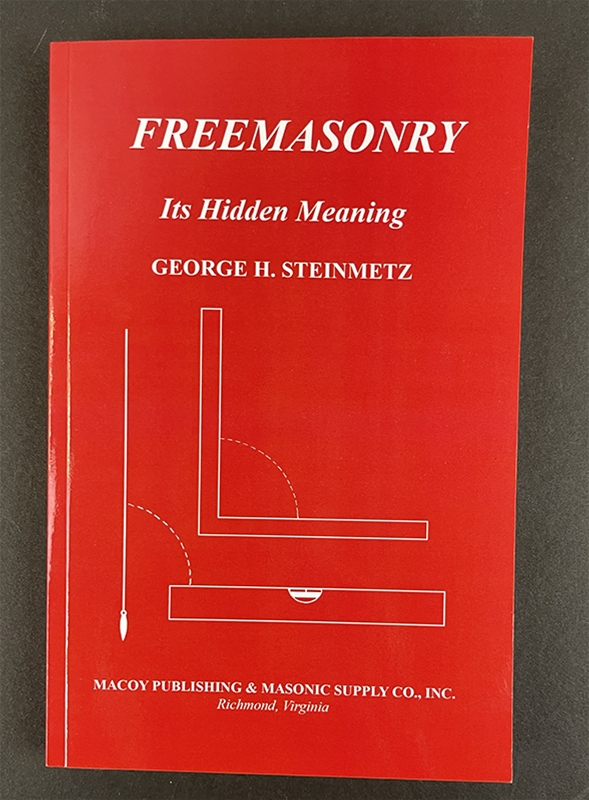 In The Hidden Meaning of Freemasonry, George Steinmetz observes: 'The other implements of Masonry are all right angles, horizontals, and perpendiculars. The trowel cannot be so described, for its point forms an acute angle. While operative tools are varied in shape to adapt them to different purposes, the symbolic trowel of Masonry should be made with an angle of sixty degrees, wherein is discovered an equilateral triangle. Thus it is discovered the "working tool" peculiar to the Master Mason is the emblem of the spiritual... Freemasonry is not a lodge, not a ritual, but a plan for the living of a life".'
Commentary: Steinmetz provides a geometric revelation. Unlike the tools of the EA and FC degrees which deal with earthly measurements, the Trowel’s triangular shape points toward the spiritual. It signals that a Master Mason must go beyond mere supervision and work on a higher, spiritual plane.
Summary: The Trowel is the finisher’s tool. It takes the individual stones we have spent a lifetime shaping and unites them into a singular, enduring structure. It requires the 'mixed' love of Claudy’s self-sacrifice and the 'spiritual triangle' of Steinmetz’s higher vision to truly bind the Craft together.
The Action: The Trestleboard Challenge
 This week, identify a 'gap' in your circle—perhaps a Brother you haven't spoken to in months or a friend you’ve drifted away from. Do not wait for them to reach out. As Claudy suggests, let the love 'well up from within' you first. Take one unselfish action—a call, a visit, or a helping hand—to spread the cement and close that gap. Practice the 'noble emulation' of being the one who can best work and best agree.
